
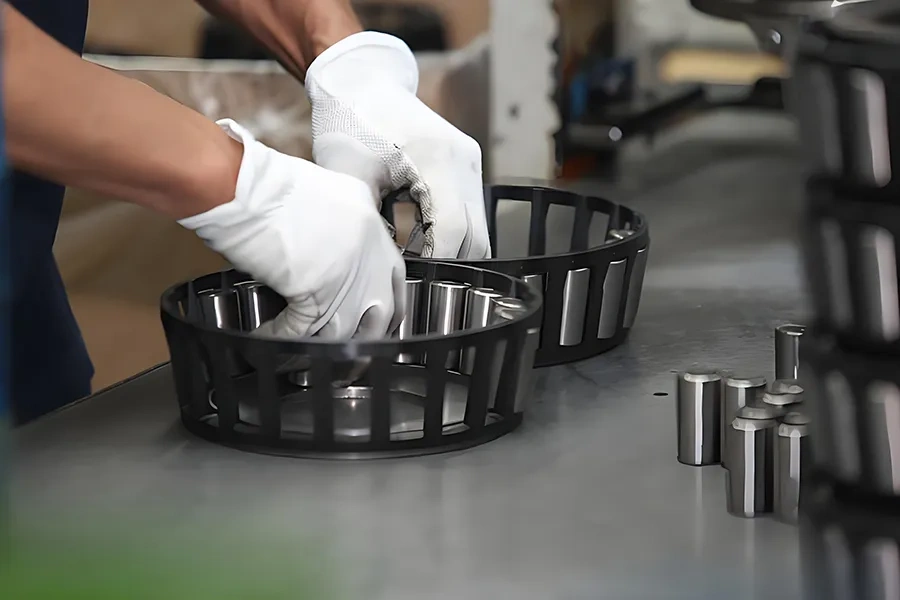
I. The Effect of Vibration on Bearings.
In normal use, bearings are highly susceptible to damage caused by vibration; spalling, indentations, rust, cracks and wear are all reflected in bearing vibration measurements. Therefore, by using specialised bearing vibration measuring instruments (such as frequency analysers), the magnitude of vibration can be measured, and the specific nature of any abnormalities can be deduced through frequency analysis. The measured values vary depending on the operating conditions of the bearing or the position of the sensor; consequently, it is necessary to analyse and compare the measurements for each machine beforehand to establish a set of criteria for assessment.
II. The Effect of Temperature on Bearings.
High temperatures are often indicative of an abnormal condition in a bearing. High temperatures are also detrimental to the bearing lubricant. In some cases, bearing overheating can be attributed to the lubricant itself. If a bearing operates continuously at temperatures exceeding 125°C for an extended period, its service life will be reduced. Causes of high bearing temperatures include: insufficient or excessive lubrication; contaminants in the lubricant; excessive load; bearing damage; insufficient clearance; and high friction generated by oil seals, amongst others.
Temperature rises are a common occurrence during bearing operation. When bearing temperature rises, first determine whether it is due to operational error. If the rise is confirmed, the following measures should be taken:
1. Check that the cooling water pressure, flow and piping system are functioning normally. If the water pressure is low, the filter may be blocked. If this cannot be rectified immediately, the machine should be shut down for maintenance; once operational status is confirmed, the machine may be restarted.
2. Check the oil pressure of the governor; low oil pressure may cause the cooling water hydraulic valve to close.
3. Check for abnormal noises from the bearings and inspect for any irregularities in bearing runout.
4. Take an oil sample to observe any changes in colour and conduct laboratory tests to determine if the oil has deteriorated. If deterioration is confirmed, the machine should be shut down and the oil replaced.
5. Check that the oil level on the dipstick is normal. If it is not, check whether the drain valve on the oil sump is fully closed. If it is closed, top up the oil; if oil is leaking from the seal gasket, the machine should be shut down for repair.
Bearings are highly sensitive to damage caused by vibration; spalling, indentations, rust, cracks and wear are all reflected in bearing vibration measurements.
Therefore, by using specialised bearing vibration measurement equipment (such as frequency analysers), the magnitude of vibration can be measured, and the specific nature of the abnormality can be deduced through frequency analysis.
The measured values vary depending on the operating conditions of the bearing or the installation position of the sensor; consequently, it is necessary to analyse and compare the measurements for each machine in advance to establish a set of criteria for assessment.
Let us now consider the effect of temperature on bearings; high temperatures are often indicative of an abnormal condition. High temperatures are also detrimental to the bearing lubricant. In some cases, bearing overheating can be attributed to the lubricant. Prolonged continuous operation at temperatures exceeding 125°C will reduce bearing life. Causes of high bearing temperatures include: insufficient or excessive lubrication, impurities in the lubricant, excessive load, bearing damage, insufficient clearance, and high friction generated by oil seals, amongst others.
Therefore, continuous monitoring of bearing temperature is essential, whether measuring the bearing itself or other critical components. Under constant operating conditions, any change in temperature may indicate a fault has occurred.
Regular measurement of bearing temperature can be carried out using a thermometer, such as a digital thermometer, which can accurately measure bearing temperature and display the reading in either Celsius or Fahrenheit. For critical bearings—those whose failure would result in equipment downtime—it is advisable to install temperature sensors.

You can select product type online samples, product samples, installation manuals, and OID Product related applications here.
You can find here that in addition to various bearings, we also provide various products such as automotive parts and precision machinery products to the world.