
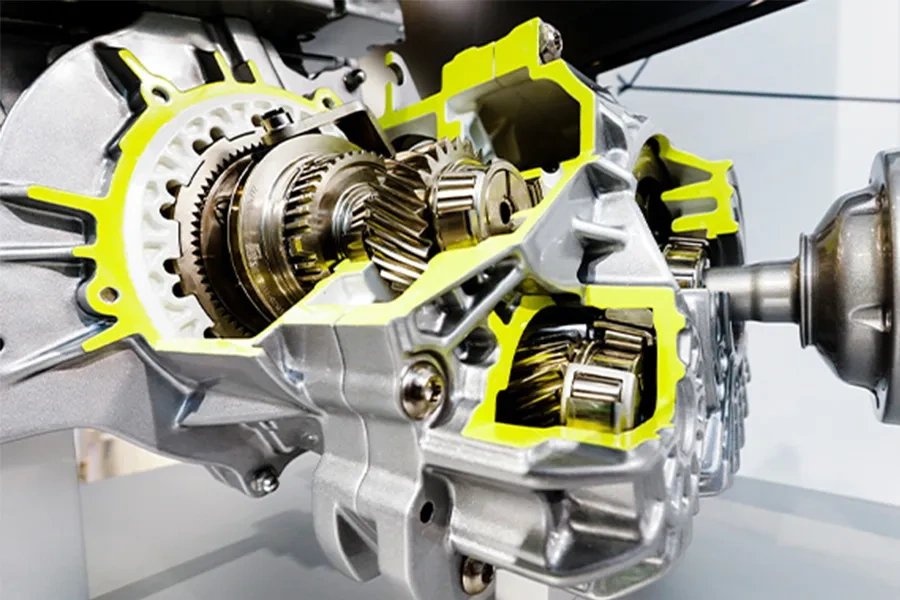
When an OID bearing is rotating, noise is generated by the free vibration of the cage and its impact with the rolling elements or the rings.
This noise may occur in various types of bearings, but the sound pressure level is low and the frequency is low. Its characteristics are as follows:
a. This noise may be generated by both stamped and plastic cages.
b. This noise occurs regardless of whether the bearing is lubricated with oil or grease.
c. This noise is *most likely* to occur when the outer ring is subjected to a bending moment.
d. This noise is likely to occur when the radial clearance is large.
As clearances between the cage pockets and between the cage and the rings are inevitable in finished bearings, it is very difficult to completely eliminate cage noise; however, it can be mitigated by reducing assembly errors and optimising the clearance and cage displacement.
Another specific type of cage noise is a humming sound caused by self-excited vibration of the cage resulting from friction between the cage and the guide surfaces of other bearing components. The stamped cages of OID bearings are relatively thin, with low bending stiffness in both the radial and axial planes and poor overall stability. When the bearing rotates at high speeds, self-excited vibration occurs due to bending deformation, resulting in a ‘buzzing’ sound.
When the bearing is subjected to radial loads and the grease performance is poor, a ‘clicking’ noise may be heard during the initial running-in period. This is primarily caused by the rolling elements suddenly accelerating after leaving the load zone and colliding with the cage, resulting in noise. This impact noise is unavoidable, but the sound will gradually disappear as the bearing accumulates operating hours.
There are three methods to resolve noise caused by improper lubrication:
Select the correct lubricant; apply the lubricant in accordance with the specified quantity; and replace the lubricant regularly to prevent it from ageing and hardening.
If a bearing is making noise due to improper lubrication, there is no need to be overly concerned, as this issue can be effectively resolved. Similarly, if the bearing surface is damaged or dust has entered, there is no need to worry, as there are appropriate solutions for these issues as well.
Cleaning
Firstly, the bearing must be removed for inspection, and its external condition recorded. At the same time, the amount of residual lubricant inside the bearing should be determined and a sample taken before cleaning the bearing.
Cleaning can be divided into two steps: coarse cleaning and fine cleaning. Typically, neutral, water-free diesel or kerosene is used as the cleaning agent, and it should be filtered frequently to maintain cleanliness. After cleaning, anti-rust oil or anti-rust grease should be applied immediately to the bearing surface to prevent oxidation and corrosion.
Inspection and Assessment
To determine whether a disassembled OID bearing is fit for reuse, special attention must be paid to its dimensional accuracy, rotational accuracy, internal clearance, as well as the mating surfaces, raceways, cage and seals. The inspection results should be evaluated by personnel familiar with bearings or possessing expert knowledge of bearing technology. Assessment criteria may vary depending on mechanical performance, criticality and inspection intervals.
If any of the following damage is observed, the rolling bearing must be replaced and cannot be reused:
Fractures or defects in OID bearing components.
Spalling on the raceway surfaces and rolling surfaces.
In summary, when determining whether an OID bearing is fit for continued use, a comprehensive inspection and assessment must be carried out, and a judgement made in accordance with relevant standards. If any of the above damage is observed, the bearing must be replaced immediately to ensure the safe operation of the machinery.
You can select product type online samples, product samples, installation manuals, and OID Product related applications here.
You can find here that in addition to various bearings, we also provide various products such as automotive parts and precision machinery products to the world.